Latest Blogs
13
Oct
October 13, 2026
Five things Canadian growers should review after harvest to prepare for a stronger start in spring.
Harvest is one of the busiest times of the year for Canadian farmers. After months of managing crops, weather, equipment and everything in between, getting the harvest in is a major accomplishment.
But once the combines leave the field, there’s still valuable work to be done.
The weeks following harvest offer an opportunity to look back at what worked, identify potential problems and make more informed decisions for the next growing season.
And a good place to start is right beneath our feet.
How did your fields perform this year? Were there areas where crops struggled, water pooled or plants showed uneven growth?
These observations can tell you a lot about what’s happening below the surface.
After harvest, take time to walk through different parts of your fields and look for signs of poor drainage, erosion, surface crusting or changes in soil structure.
Digging into the soil can also reveal useful information about root development, soil aggregation and potential restrictions beneath the surface.
Keep track of what you find. Comparing observations across seasons can help identify recurring problems and guide future management decisions.
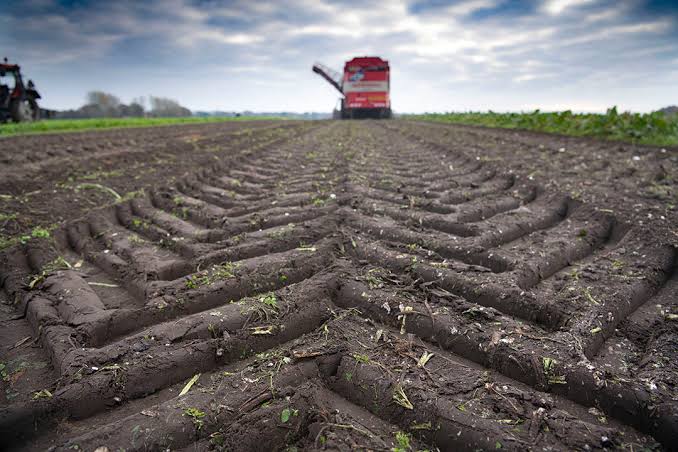
Heavy machinery is essential during harvest, but repeated equipment traffic can affect soil structure, particularly when fields are wet.
According to the University of Minnesota Extension, heavy axle loads combined with wet soil conditions can cause compaction that extends well below normal tillage depth, potentially affecting crops for multiple seasons.
Compaction reduces pore space in the soil, which can restrict root growth, limit water infiltration and make it harder for plants to access nutrients.
Pay particular attention to headlands, wheel tracks and areas where equipment made repeated passes.
Visible ruts, poor drainage and restricted root growth can all be warning signs. A shovel examination or penetrometer assessment, used under suitable soil-moisture conditions, can help identify compacted layers. Penn State Extension offers additional guidance on using a penetrometer to assess subsurface compaction.
Not every field needs corrective tillage. In fact, working wet soil can make compaction and structural damage worse.
The first step is understanding where the problem exists and how serious it is before deciding what action to take.
How much of this year’s nutrient management plan worked as expected?
Fall can be a useful time to assess soil fertility and prepare for next season’s crop requirements.
The Ontario Ministry of Agriculture, Food and Agribusiness’ Soil Fertility Handbook identifies fall after harvest as a common time for soil sampling, allowing growers to receive laboratory results and plan nutrient management before the next growing season.
Depending on the crop, region and soil conditions, testing can provide information about pH, phosphorus, potassium and other nutrient levels. Nitrogen testing may require different timing and interpretation based on local recommendations.
Rather than relying only on what was applied last season, use soil test results alongside yield records, crop observations and field history to evaluate what might need to change.
This is also a good opportunity to review nutrient availability, not just nutrient quantity.
Healthy root systems, good soil structure and appropriate moisture conditions all play important roles in helping plants access the nutrients available in the soil.
Planning now gives growers more time to consider fertilizer strategies, biological inputs and other soil management practices before the spring rush.
What’s left in the field after harvest matters, too.
Crop residues can help protect the soil surface from erosion, moderate temperature changes and contribute organic matter over time.
The University of Minnesota Extension highlights the importance of maintaining crop residue cover to reduce erosion, particularly when selecting fall tillage practices.
But residue management isn’t the same for every farm.
A field following corn may have very different challenges from one following soybeans, canola or wheat. Soil texture, drainage, crop rotation and the amount of residue remaining all influence the best approach.
Where appropriate, cover crops can also help maintain living roots, protect exposed soil and support longer-term soil health. The University of Minnesota Extension’s cover crop resources explain how cover crops can support erosion control, soil structure and nutrient management.
The key is to consider how fall management decisions might affect soil conditions, moisture and planting operations next spring.
Sometimes the most valuable information comes from what you’ve already experienced.
Before the details of this growing season fade, take a little time to review:
These observations, combined with soil test results and yield data, can help you make more targeted decisions rather than starting every season with the same approach.
They can also help identify opportunities for small-scale trials before introducing changes across an entire operation.
There isn’t one approach that works for every field, crop or growing region.
A grower managing canola in Saskatchewan faces different conditions from someone producing corn in Ontario or vegetables in British Columbia.
But one principle applies across farming systems: understanding your soil is an important part of making better crop management decisions.
At Agrotek Industries, we work with growers and research partners to explore how soil health, humic substances and plant nutrition can support productive, sustainable agriculture.
We believe good decisions start with understanding what’s happening in the field, asking the right questions and choosing solutions based on actual crop and soil needs.
As this harvest season wraps up, take a moment to look beyond the yield numbers.
What did your soil tell you this year, and what can you do differently next spring?
Looking ahead to the next growing season? Explore Agrotek’s soil health and plant nutrition solutions, or connect with our team to discuss your crop management priorities.
Interested in learning more about how Agrotek can revolutionize your
farming practices? Get in
touch with us today!